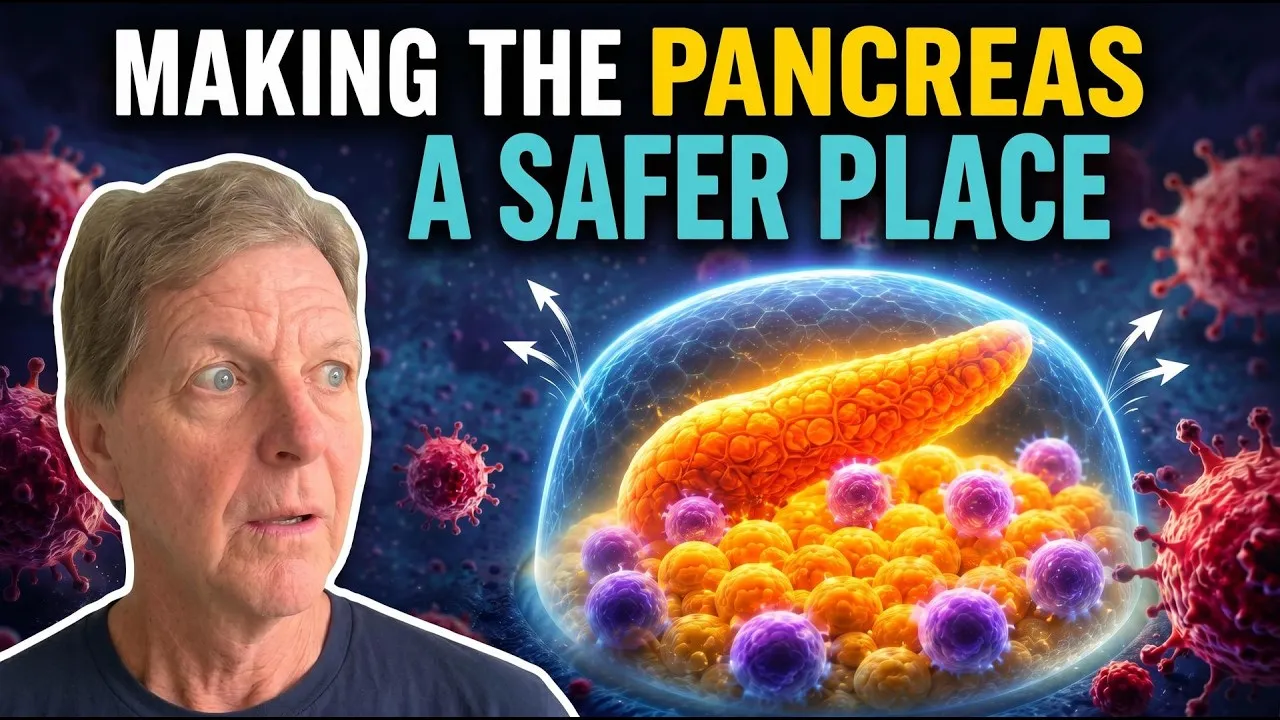
Changing the Pancreas Environment: A New Approach to Protecting Beta Cells
Researchers are exploring whether engineered stem cells that reduce inflammation might create a safer environment for insulin-producing cells to survive. This preclinical strategy takes a different approach than directly replacing damaged beta cells.
Evidence label explains the kind of source behind this article (for example peer-reviewed literature vs community video). It is not medical advice.
Key takeaways
- Scientists at the Medical University of South Carolina are developing genetically engineered stem cells designed to produce alpha-1 antitrypsin (AAT), a protein that helps regulate inflammation in the pancreas.
- Rather than focusing solely on replacing destroyed beta cells, this research aims to change the immune environment around the pancreas to make it less hostile to beta cell survival.
- The approach compares the pancreas to soil that has become toxic for healthy cells—the goal is to detoxify that environment rather than just replant new cells.
- This research remains in the preclinical stage and has not yet advanced to human trials.
- If successful, this strategy could work alongside other functional cure approaches being developed for Type 1 diabetes.
Rethinking How We Approach Type 1 Diabetes
For decades, Type 1 diabetes research has centered on a straightforward goal: replace the insulin-producing beta cells that the immune system destroys. But researchers at the Medical University of South Carolina are asking a different question: what if the real problem isn't just the loss of cells, but the hostile environment that destroyed them in the first place?
This shift in perspective is leading to a new preclinical approach. Instead of focusing solely on cell replacement, scientists are exploring whether they can change the conditions inside the pancreas itself—making it a place where beta cells could actually survive.
Understanding Alpha-1 Antitrypsin and Inflammation
The key to this approach is a naturally occurring protein called alpha-1 antitrypsin (AAT). This protein plays an important role in regulating inflammation throughout the body. In Type 1 diabetes, chronic inflammation in the pancreas contributes to the destruction of beta cells.
Researchers are using genetic engineering to create stem cells that produce AAT. The idea is that by increasing AAT production directly in the pancreas, they could dial down the inflammatory environment that makes the pancreas a hostile place for beta cells to survive.
A Soil-and-Seeds Metaphor
One way to understand this research is through a biological comparison: the pancreas has become like poisoned soil. You can plant new seeds—new beta cells—but they won't thrive in toxic ground.
By engineering stem cells to produce AAT and reduce inflammation, researchers are attempting to detoxify that soil first. The hope is that a less inflamed pancreas environment would allow beta cells (whether regenerated or transplanted) to survive and function.
Where This Research Stands Now
This work is currently in the preclinical stage, meaning it's being tested in laboratory and animal studies. Human trials have not yet begun.
If early results continue to show promise, researchers will eventually need to test whether this approach is safe and effective in people with Type 1 diabetes. Even then, success would likely mean this strategy works best as part of a broader treatment plan, strengthening other functional cure approaches rather than serving as a standalone solution.
Evidence label
Origin: Type-1 Diabetic Warriors (Video report). Evidence: Video report — unverified, pending corroboration. Type1Cure is an information and intelligence hub, not a medical advice service. This article summarizes published research and does not provide diagnosis, treatment, or personal medical guidance. Always talk to your own care team before changing anything about your Type 1 diabetes management.
Type1Cure is an information and intelligence hub, not a medical advice service. This article summarizes published research and does not provide diagnosis, treatment, or personal medical guidance. Always talk to your own care team before changing anything about your Type 1 diabetes management.
Related reading
More evidence-labeled coverage across the Type1Cure library.
- Cure & AdvancementsCell Replacement Therapy: A New Frontier in Type 1 Diabetes ResearchVideo report, corroborated with 5 indexed studies
- Cure & AdvancementsWhy Beta Cells Die in Type 1 Diabetes While Alpha Cells SurviveNews report, corroborated with 2 indexed studies
- Cure & AdvancementsEarly Trial Shows Some People with Type 1 Diabetes Can Reduce or Stop Insulin—Here's What We KnowNews report, corroborated with 3 indexed studies
- Cure & AdvancementsBeta Cell Therapy: Moving From Lab Promise to Real-World TreatmentVideo report, corroborated with 2 indexed studies
- Cure & AdvancementsUnderstanding the Eleodon Trial: What Early Results ShowVideo report — unverified, pending corroboration
- Cure & AdvancementsIslet Cell Therapies Advance: What You Need to KnowNews report, corroborated with 3 indexed studies